GFC hair therapy is commonly used to support scalp health, reduce excessive hair fall, and improve hair density in individuals experiencing early-stage thinning or weakened hair follicles.
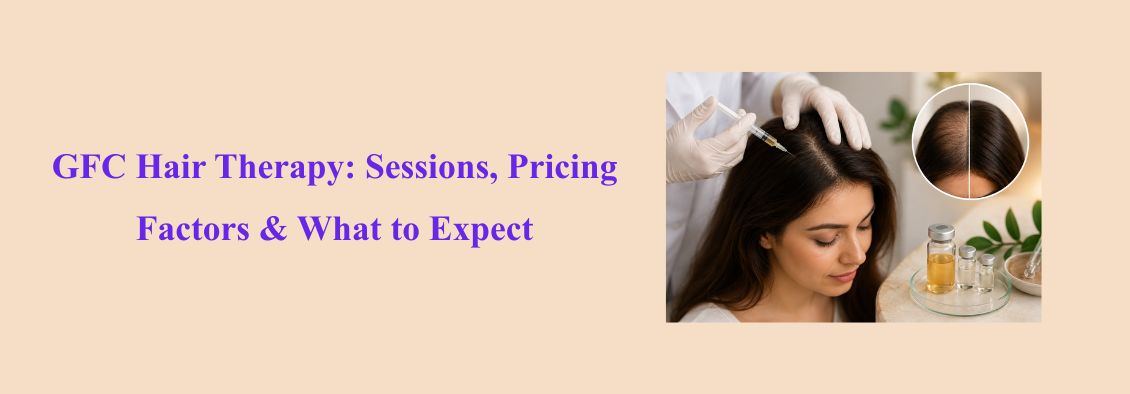
GFC Hair Therapy: Sessions, Pricing Factors & What to Expect
Hair thinning, excessive shedding, and reduced hair density are increasingly common concerns among both men and women today. With advancements in regenerative dermatology, non-surgical treatments such as GFC (Growth Factor Concentrate) therapy have become popular for individuals looking to improve hair quality and support healthier follicle activity without surgery.
At Livglam, hair loss treatment sessions — including GFC, PRP, and related regenerative therapies — are priced between ₹5,000 and ₹15,000 per session. The exact rate for your case depends on the number of sessions needed, the severity of thinning, and whether GFC is combined with other therapies.
For session packages, pricing, and to book your treatment, visit our GFC hair treatment cost in Bangalore service page.
One of the most common questions people ask before starting treatment is: how much does GFC hair therapy cost, and how many sessions are usually required?
This guide explains the major factors that influence GFC therapy pricing, expected timelines for visible improvement, session recommendations, and how the procedure compares with other hair restoration approaches.
For people exploring broader solutions for thinning hair, professional hair loss treatments in Bangalore may include a combination of scalp therapies, medical management, and advanced restoration procedures depending on the severity of hair fall.
What Is GFC Hair Therapy?
GFC stands for Growth Factor Concentrate, an advanced scalp rejuvenation treatment designed to support natural hair growth using concentrated growth factors extracted from the patient's own blood. Unlike traditional PRP (Platelet-Rich Plasma), GFC technology isolates purified growth factors without unnecessary blood components such as red blood cells or excessive platelets. These concentrated growth factors are then injected into targeted areas of the scalp.
The treatment is commonly recommended for individuals experiencing:
- Early-stage hair thinning
- Weak hair roots
- Reduced hair density
- Mild to moderate hair fall
- Diffuse thinning in men and women
The goal of GFC therapy is to improve scalp health and create a healthier environment for existing hair follicles.
What Factors Influence GFC Hair Therapy Pricing?
The overall cost of GFC therapy can vary depending on several medical and procedural factors. Instead of focusing only on per-session pricing, it is important to understand what contributes to the final treatment plan.
1. Number of Sessions Required
One of the biggest factors affecting treatment cost is the number of sessions recommended. Different hair concerns may require different treatment durations:
| Hair Condition | Typical Session Range |
|---|---|
| Mild hair thinning | 3–4 sessions |
| Moderate density loss | 4–6 sessions |
| Early-stage baldness | 6–8 sessions |
Individuals with advanced hair loss may require additional therapies alongside GFC.
2. Severity of Hair Loss
The stage of hair thinning significantly influences the treatment plan. Patients with active follicles generally respond better to regenerative scalp therapies than individuals with completely inactive or bald areas.
In cases of severe baldness or receding hairlines, doctors may discuss more advanced procedures such as hair transplant treatments in Bangalore to restore lost density.
3. Technology and Extraction Systems Used
The quality of GFC preparation systems can also impact pricing. Advanced extraction kits and clinically approved processing systems help maintain higher purity and concentration of growth factors.
Higher-quality systems are often associated with:
- Better consistency
- Improved safety standards
- More predictable outcomes
- Reduced inflammation after treatment
4. Combination Therapies
Some treatment plans may combine GFC with advanced regenerative hair restoration therapies to enhance follicle stimulation, improve scalp health, and support long-term hair growth outcomes. The most suitable combination depends on the severity of hair loss, scalp condition, age, and treatment goals. These may include:
- PRP (Platelet-Rich Plasma) Therapy
- FGFC (Filtered Growth Factor Concentrate) Therapy
- QR678 Hair Growth Factor Therapy
- Exosome Hair Therapy
- Mesotherapy with Peptides
- Low-Level Laser Therapy (LLLT)
- Prescription Medications
- Nutritional Supplementation
Advanced therapies such as FGFC, QR678, and Exosome Hair Therapy are increasingly being recommended for patients seeking next-generation regenerative solutions for hair thinning and reduced hair density. Combination approaches are typically advised after a detailed scalp analysis and medical evaluation.
How Does a Typical GFC Session Work?
A GFC therapy session is relatively quick and minimally invasive.
Step 1: Blood Collection
A small blood sample is collected, similar to a routine diagnostic blood test.
Step 2: Growth Factor Separation
The sample is processed using specialised activation tubes that isolate concentrated growth factors associated with follicle stimulation and tissue repair.
Step 3: Scalp Micro-Injections
The purified solution is injected into targeted scalp areas using fine needles. The procedure usually takes around 20–30 minutes depending on the treatment area.
Step 4: Post-Treatment Recovery
Most people resume normal activities shortly after the session since there is minimal downtime involved.
How Soon Are Results Usually Seen?
Hair restoration treatments require patience because follicles respond gradually over time. Most individuals notice early improvements within a few weeks, while visible density changes may continue developing over several months.
Common improvements may include:
- Reduced daily hair shedding
- Improved hair texture
- Better scalp health
- Increased thickness in existing strands
- Stronger-looking roots
Results vary based on genetics, scalp condition, lifestyle habits, nutrition, and treatment consistency.
Is GFC Different From PRP?
GFC and PRP are both regenerative therapies, but they differ in how growth factors are processed and delivered. Many dermatologists consider GFC a more advanced evolution of PRP because it uses purified growth factors rather than broader plasma components. Some commonly discussed differences include:
| GFC Therapy | Traditional PRP |
|---|---|
| Higher concentration of growth factors | Lower concentration |
| Reduced inflammatory components | Contains platelets and plasma |
| More targeted preparation | Broader blood composition |
| Minimal swelling in many cases | Mild swelling possible |
| Shorter recovery discomfort | Slightly higher discomfort |
The suitability of either option depends on the patient's scalp condition and medical evaluation.
Who May Benefit From GFC Hair Therapy?
GFC hair therapy is usually considered for individuals experiencing active hair thinning rather than complete baldness. People who may benefit include:
- Men with early hairline thinning
- Women with diffuse hair fall
- Individuals with stress-related shedding
- Patients with weakened follicle density
- People seeking non-surgical scalp rejuvenation
However, advanced bald patches with inactive follicles may require alternative restoration options.
Lifestyle Factors That Can Affect Hair Results
Even advanced scalp treatments work best when combined with healthy long-term hair care habits. Important supportive factors include:
- Balanced nutrition
- Iron and vitamin management
- Proper scalp hygiene
- Stress management
- Consistent sleep
- Avoiding excessive heat or chemical damage
Hair fall often has multiple contributing causes, which is why scalp evaluation remains important before choosing any procedure.
Questions to Ask Before Starting GFC Therapy
Before beginning treatment, it is useful to discuss:
- Number of sessions likely required
- Expected maintenance schedule
- Realistic timelines for improvement
- Combination therapy recommendations
- Existing medical conditions affecting hair health
- Scalp suitability for regenerative procedures
Understanding these factors helps set realistic expectations regarding both cost and outcomes.
Frequently Asked Questions
1. What is GFC hair therapy used for?
2. How is GFC different from PRP hair treatment?
GFC therapy uses concentrated growth factors extracted from blood using specialised processing methods, while PRP contains broader plasma components and platelets. Many patients consider GFC a more advanced regenerative scalp therapy.
3. How many GFC sessions are usually recommended?
The number of sessions depends on the severity of hair thinning. Mild cases may require 3–4 sessions, while moderate thinning or early-stage baldness may need 4–8 sessions over several months.
4. When can visible improvements from GFC therapy be noticed?
Most individuals begin noticing reduced hair shedding within a few weeks, while improvements in density and texture may continue developing over several months.
5. Is GFC hair therapy painful?
The procedure involves micro-injections on the scalp, so mild discomfort may occur during treatment. However, most people tolerate the sessions well with minimal downtime afterward.
6. Does GFC therapy work for advanced baldness?
GFC therapy is generally more effective for active hair thinning and weakened follicles. Advanced bald patches with inactive follicles may require alternative hair restoration procedures.
7. Can men and women both undergo GFC therapy?
Yes, GFC therapy is commonly performed for both men and women experiencing hair thinning, stress-related shedding, or reduced hair density.
8. What factors influence the overall cost of GFC therapy?
The total treatment cost may vary based on the number of sessions required, scalp condition, clinic technology, doctor expertise, and whether additional therapies are included in the treatment plan.
9. Are there any lifestyle factors that affect hair treatment results?
Yes. Nutrition, stress levels, sleep quality, scalp hygiene, and underlying medical conditions can all influence overall hair health and treatment outcomes.
10. Can GFC therapy be combined with other advanced hair treatments?
Yes. Depending on the individual scalp condition and hair loss pattern, GFC therapy may be combined with other regenerative treatments such as PRP, FGFC, QR678 Hair Therapy, Exosome Hair Therapy, Mesotherapy with Peptides, medications, or nutritional support programs.
11. Is there any downtime after a GFC hair session?
Most individuals can return to their normal routine shortly after the session. Minor redness or scalp sensitivity may occur temporarily in some cases.
12. Who should consult a specialist before considering GFC therapy?
Individuals experiencing persistent hair fall, visible thinning, sudden shedding, or scalp-related concerns should consider professional scalp evaluation to determine the most suitable treatment approach.
13. How much does GFC hair therapy cost at Livglam?
Hair loss treatment sessions at Livglam, including GFC, are priced between ₹5,000 and ₹15,000 per session depending on severity, number of sessions required, and whether combination therapies are used. A scalp evaluation determines your exact treatment plan and cost.
Final Thoughts
GFC therapy has become one of the most discussed non-surgical approaches for supporting scalp health and managing early-stage hair thinning. The treatment is designed to improve follicle support using concentrated growth factors derived from the body itself.
The total cost of treatment can vary depending on the severity of hair loss, session requirements, clinic protocols, and whether combination therapies are recommended.
For individuals noticing ongoing thinning, early evaluation often helps identify the most suitable treatment approach before hair loss progresses further.
If you are exploring medically guided options for thinning hair, professional consultation and scalp analysis with Livglam can help determine whether regenerative scalp therapies, medical management, or advanced restoration procedures may be more appropriate for your condition.
About the Author

Dr. Harish B (B.D.S, F.A.M, F.H.T, MBA-HM)
Dr. Harish B is a dedicated Aesthetic Physician and Cosmetologist with over a decade of experience in advanced skin, face, body, hair, and laser treatments. Recognised as one of Bangalore's leading aesthetic experts, he has trained dermatologists and plastic surgeons across India in Botox and dermal filler techniques for a top global manufacturer.
His expertise is internationally recognised, having attended the AMWC Conference in Monte Carlo and completed advanced training programs in Singapore and Dubai. Known as a Celebrity Aesthetic Physician, Dr. Harish has worked with numerous South Indian film personalities while maintaining a patient-first approach that blends artistry with medical precision.
Recent Blogs








Book your slot to know things about laser treatment!
Just a click away to experience high quality aesthetic treatments.
