Melasma is a common pigmentation condition that causes brown or grey-brown patches, usually on the face, caused by melanocytes producing excess pigment in response to hormones, sun exposure, or genetics.
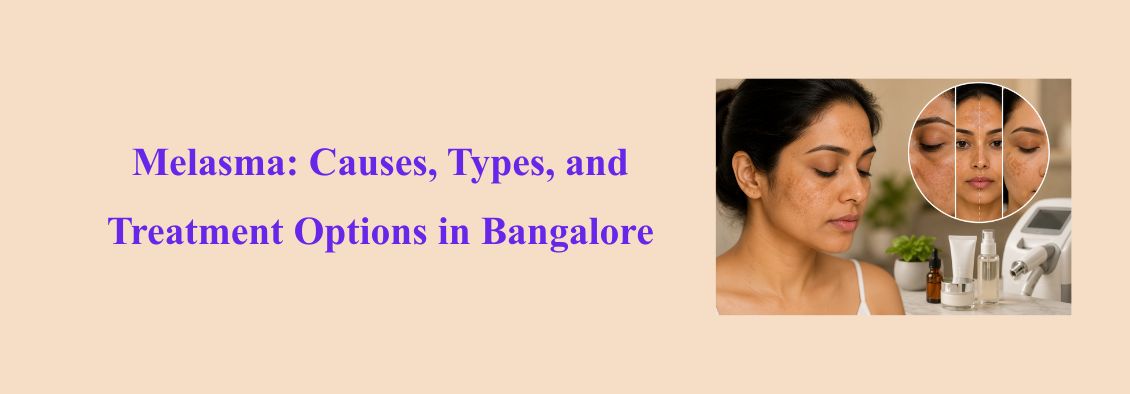
Melasma: Causes, Types, and Treatment Options in Bangalore
Melasma is a common skin condition that causes brown or grey-brown patches, usually across the cheeks, forehead, nose bridge, or upper lip. It happens when pigment-producing cells overproduce melanin in response to hormones, sun exposure, or genetics. It's harmless, very treatable, and tends to recur without ongoing sun protection. Here's what causes it, how it's classified, and which treatments actually work.
What Is Melasma?
Melasma develops when melanocytes, the cells that produce your skin's pigment, go into overdrive and create more melanin than usual in specific areas. The result is patches that are noticeably darker than the surrounding skin. It's most common in women, particularly those with medium-to-deep skin tones (Fitzpatrick types III–V), which makes it a frequent concern across Indian skin types.
Dermatologists generally classify melasma into three types based on how deep the pigment sits:
- Epidermal melasma — pigment sits in the top skin layer and typically responds best to topical treatment.
- Dermal melasma — pigment sits deeper and is harder to treat with topicals alone.
- Mixed melasma — a combination of both, the most common presentation.
What Causes Melasma?
- Hormonal changes. Pregnancy (often called "the mask of pregnancy," or chloasma), birth control pills, and hormone replacement therapy are common triggers.
- Sun and light exposure. UV rays, and even visible light, stimulate melanocytes. This is why melasma reliably worsens with unprotected sun exposure and why it's more active in tropical climates like Bangalore's.
- Genetics. A family history of melasma raises your own likelihood of developing it.
- Skin type. Darker skin tones produce more melanin under the same triggers, so melasma shows up more often and more visibly.
- Other factors. Certain medications, thyroid dysfunction, and skin irritation from harsh products can also trigger or worsen melasma.
Is Melasma Curable?
Melasma can be managed effectively, but "cured" isn't quite the right word for it. Treatment can fade existing patches significantly, sometimes to the point where they're barely visible, but the underlying tendency to overproduce pigment doesn't disappear. That means melasma can come back, especially after sun exposure, pregnancy, or stopping maintenance treatment. Anyone promising a one-time permanent fix isn't giving you the full picture — consistent management is what actually keeps it away.
Melasma Treatment Options
- Topical treatments. Ingredients such as hydroquinone, tranexamic acid, azelaic acid, kojic acid, and retinoids are standard first-line options, usually prescribed after a dermatologist evaluates your skin type and the depth of pigmentation.
- In-clinic procedures. Chemical peels and pigment-targeting laser treatments can help reduce more stubborn pigmentation once a dermatologist confirms they're appropriate for your skin. Livglam's chemical peel, micro needling and laser skin rejuvenation services fall into this category — suitability depends on your specific case.
- Cosmetic camouflage. Mineral-based makeup can even out visible tone while topical or in-clinic treatment takes effect.
Most people need consistent treatment for 8–12 weeks before they see visible fading, though results vary by melasma type and skin response.
Self-Care and Prevention
- Sunscreen, non-negotiable. Use a broad-spectrum SPF 30 or higher every day, and reapply every 2–3 hours if you're outdoors. This single habit does more to prevent melasma flare-ups than almost anything else.
- Avoid peak sun hours. Limit direct exposure between 10 a.m. and 4 p.m., and use a wide-brimmed hat when you're out.
- Go gentle on your skin. Harsh scrubs, hot water, and fragranced products can irritate skin and trigger rebound pigmentation. Stick to gentle, fragrance-free skincare.
- Watch for hormonal triggers. If you notice melasma worsening after starting a new birth control or hormone therapy, talk to your doctor about alternatives.
- Stay consistent. Melasma treatment is a marathon. Skipping sunscreen for a week can undo months of progress.
When to See a Specialist
If over-the-counter creams haven't worked after a few months, or your pigmentation is spreading, a dermatologist can confirm the type of melasma you have and build a treatment plan around it rather than guessing with generic products. Livglam's dermatology team in Jayanagar, Bangalore evaluates skin type, pigment depth, and triggers before recommending a plan.
The Livglam Approach to Melasma
Melasma responds differently from person to person, so Livglam Aesthetic Clinic doesn't run one fixed protocol for every patient. Dr. Harish B and the clinical team evaluate your skin type, the depth of pigmentation, and likely triggers (hormonal, sun-related, or genetic) before recommending topical treatment, in-clinic procedures, or a combination of both.
Frequently Asked Questions
1. What is melasma?
2. What causes melasma?
The main triggers are hormonal changes (pregnancy, birth control), sun and light exposure, genetics, and having a darker skin tone. Certain medications and thyroid conditions can also play a role.
3. Is melasma curable?
Not in the sense of a one-time permanent fix. Melasma can be managed and significantly faded with consistent treatment, but the tendency to develop it again, especially with sun exposure, doesn't go away completely.
4. Can melasma be cured permanently?
No treatment guarantees permanent removal. Topical treatment, peels, and laser therapy can fade patches substantially, but ongoing sun protection is what keeps melasma from returning.
5. How can I remove melasma from my face permanently?
There's no single permanent removal method. The most effective approach combines dermatologist-prescribed topicals or in-clinic procedures with strict daily sun protection, since unprotected sun exposure is the single biggest reason melasma returns.
6. How do I treat melasma on my face naturally?
Sun avoidance, daily broad-spectrum sunscreen, and gentle, non-irritating skincare are the main things you can do at home. They support treatment and slow progression, but they won't fade existing pigment the way a dermatologist-guided treatment can.
7. How can I reduce melasma on my face?
A dermatologist can prescribe topical treatments like hydroquinone or tranexamic acid, or recommend in-clinic options like chemical peels or laser therapy, depending on how deep the pigment sits. Daily SPF is essential alongside any treatment.
8. Does melasma go away after pregnancy?
Pregnancy-related melasma (chloasma) often fades within a few months after delivery as hormone levels stabilise, but it doesn't always disappear completely and may need treatment to fully resolve.
9. Does melasma get worse with sun exposure?
Yes. UV rays and visible light both stimulate the pigment cells responsible for melasma, which is why flare-ups are common after sun exposure and why daily sunscreen is central to managing it.
10. Which specialist should I see for melasma in Bangalore?
A dermatologist or aesthetic physician experienced in pigmentation disorders can diagnose your melasma type and build a treatment plan. Livglam Aesthetic Clinic in Jayanagar, Bangalore offers dermatologist-led evaluation and treatment for melasma.
About the Author

Dr. Harish B (B.D.S, F.A.M, F.H.T, MBA-HM)
Dr. Harish B is a dedicated Aesthetic Physician and Cosmetologist with over a decade of experience in advanced skin, face, body, hair, and laser treatments. Recognised as one of Bangalore's leading aesthetic experts, he has trained dermatologists and plastic surgeons across India in Botox and dermal filler techniques for a top global manufacturer.
His expertise is internationally recognised, having attended the AMWC Conference in Monte Carlo and completed advanced training programs in Singapore and Dubai.
Recent Blogs










Book your slot to know things about laser treatment!
Just a click away to experience high quality aesthetic treatments.
