Hair fall is usually temporary shedding caused by factors like stress, poor diet, or seasonal changes, while hair loss is a more persistent condition that leads to visible thinning or bald patches.
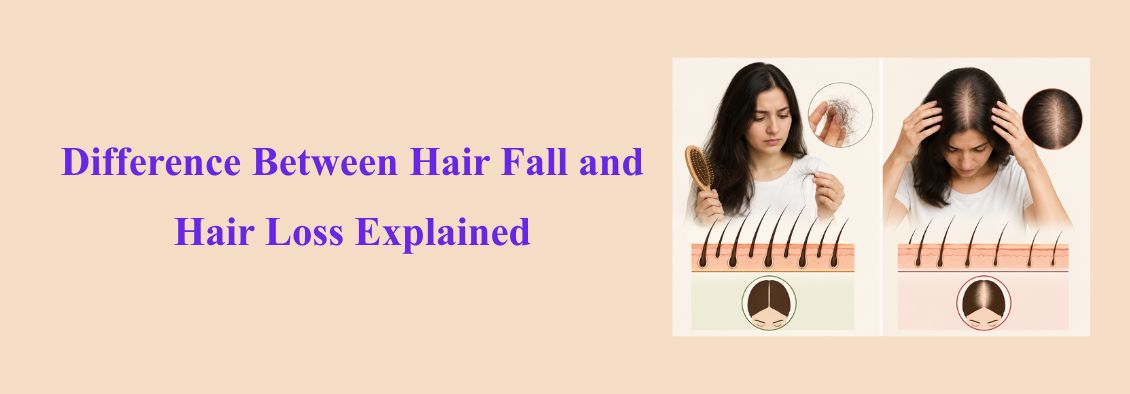
Difference Between Hair Fall and Hair Loss Explained
Hair fall and hair loss are two terms that are often used interchangeably, but they are not the same. While occasional hair shedding is completely normal, persistent thinning, visible scalp exposure, or patchy bald spots may indicate a more serious condition requiring professional attention.
On average, a person loses around 50–100 hair strands daily as part of the natural hair growth cycle. However, when hair shedding becomes excessive or hair fails to grow back properly, it may signal underlying hair loss. Understanding the difference between hair fall and hair loss is important for identifying the right treatment and preventing long-term scalp concerns.
If you are noticing excessive shedding, thinning hair density, or visible scalp patches, seeking the best hair loss treatment in Bangalore early can help improve treatment outcomes and prevent further progression.advanced treatments such as PRP, GFC, FGFC, QR678, Exosomes hair therapy, and Mesotherapy with peptides are used to improve scalp health, strengthen hair follicles, and support healthier hair growth.
In this guide, we explain the key differences between hair fall and hair loss, their causes, symptoms, and the most effective treatment options available.
What Is Hair Fall?
Hair fall refers to temporary hair shedding that occurs naturally during the hair growth cycle. It is usually caused by external or short-term factors and does not always lead to permanent thinning or baldness.
In most cases, hair fall is reversible once the underlying trigger is addressed.
Common Causes of Hair Fall
Hair fall can occur due to:
- Stress and anxiety
- Poor diet
- Nutritional deficiencies
- Seasonal changes
- Lack of sleep
- Excessive heat styling
- Harsh hair products
- Hormonal fluctuations
- Temporary illness
Lifestyle and environmental factors often play a major role in triggering temporary hair shedding.
ESigns of Hair Fall
Common signs include:
- Excess hair on pillows or combs
- Hair shedding during washing
- Temporary increase in hair fall
- Even hair shedding across the scalp
- Hair regrowth after some time
Hair fall usually does not create visible bald spots or severe scalp exposure.
What Is Hair Loss?
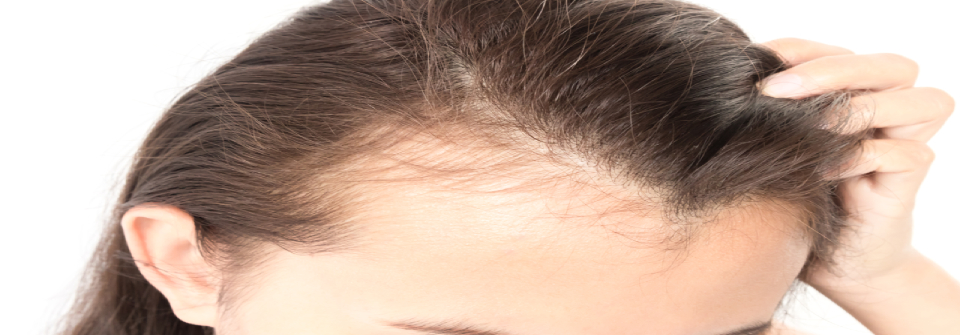
Hair loss is a more persistent condition where hair follicles weaken, shrink, or stop producing new hair altogether. Unlike temporary hair fall, hair loss often causes visible thinning, receding hairlines, or bald patches.
Hair loss can become progressive if left untreated.
Common Types of Hair Loss
Androgenetic Alopecia
Also known as male-pattern or female-pattern baldness, this is the most common form of hair loss caused by genetics and hormonal factors.
Alopecia Areata
An autoimmune condition that causes sudden patchy hair loss.
Telogen Effluvium
Stress-related hair loss that triggers excessive shedding after physical or emotional stress.
Traction Alopecia
Hair loss caused by tight hairstyles that continuously pull on the scalp.
Common Causes of Hair Loss
Hair loss is often linked to deeper internal causes such as:
- Genetics
- Hormonal imbalance
- Thyroid disorders
- PCOS
- Autoimmune diseases
- Chronic stress
- Medical conditions
- Scalp disorders
- Ageing
Unlike temporary hair fall, hair loss frequently requires medical intervention and long-term treatment.
Signs of Hair Loss
Hair loss often presents with more visible scalp changes such as:
Advantages
- Widening hair partition
- Receding hairline
- Crown thinning
- Bald patches
- Visible scalp
- Reduced hair density
- Slow or absent regrowth
In many cases, the hair does not grow back naturally without proper treatment.
Key Difference Between Hair Fall and Hair Loss
Although both conditions involve shedding hair, their causes, severity, and treatment approaches are different.
| Hair Fall | Hair Loss |
|---|---|
| Usually temporary | Often long-term or progressive |
| Caused by stress, diet, or external factors | Often caused by genetics or medical conditions |
| Hair regrows naturally | Regrowth may require treatment |
| Even shedding across scalp | Patchy or patterned thinning |
| Less severe | More noticeable scalp visibility |
| Common during seasonal or hormonal changes | Often worsens gradually over time |
Understanding these differences is essential for choosing the right treatment approach.
How to Identify Whether You Have Hair Fall or Hair Loss
You may be experiencing hair fall if:
- Hair shedding started recently
- Hair grows back normally
- There are no visible bald spots
- Hair density remains mostly unchanged
You may be experiencing hair loss if:
- Hair thinning continues for several months
- Scalp visibility increases
- Hairline keeps receding
- Bald spots appear
- Regrowth becomes limited
If you are unsure, consulting a hair specialist can help determine the exact cause.
Can Hair Fall Turn Into Hair Loss?
Yes, untreated or prolonged hair fall may eventually contribute to hair thinning and chronic hair loss.
For example:
- Continuous nutritional deficiency can weaken follicles
- Chronic stress may trigger long-term shedding
- Repeated heat damage can affect scalp health
- Hormonal imbalance may worsen thinning gradually
Early intervention is important to prevent temporary hair fall from progressing into permanent hair loss.
Diagnosis and Scalp Evaluation
Professional diagnosis helps identify whether the issue is temporary shedding or long-term hair loss.
Hair specialists may evaluate:
- Scalp condition
- Hair density
- Follicle health
- Family history
- Hormonal factors
- Nutritional deficiencies
In some cases, blood tests or scalp analysis may be recommended to determine the root cause accurately.
Treatment Options for Hair Fall
Treatment for hair fall mainly focuses on addressing temporary triggers, improving scalp health, and strengthening weakened hair follicles.
Nutritional Support
Correcting deficiencies through a balanced diet and supplements may help reduce excessive shedding.
Stress Management
Reducing stress through sleep improvement, exercise, and relaxation techniques can improve the hair growth cycle.
Gentle Hair Care
Using mild shampoos, reducing heat exposure, and avoiding harsh chemicals can minimize breakage and shedding.
PRP and GFC Therapy
Advanced scalp treatments like PRP and GFC may help strengthen follicles and improve hair growth naturally.
Mesotherapy with Peptides
Mesotherapy helps nourish the scalp with vitamins, peptides, and essential nutrients to support healthier hair growth and reduce hair fall.
Treatment Options for Hair Loss
Hair loss treatment depends on the underlying condition, severity, and degree of follicular damage.
Minoxidil
A commonly recommended topical treatment that supports hair regrowth.
Medications
Doctors may prescribe medications to slow hair loss progression.
PRP Therapy
Helps stimulate dormant follicles and improve scalp circulation.
FGFC Therapy
FGFC therapy uses concentrated growth factors to support follicle repair and improve hair density.
QR678 Hair Therapy
QR678 therapy delivers growth factors and peptides into the scalp to help reduce hair loss and stimulate hair regrowth.
Exosomes Hair Therapy
Exosomes therapy supports follicular regeneration and scalp rejuvenation for chronic hair thinning and hair loss conditions.
Hair Transplant
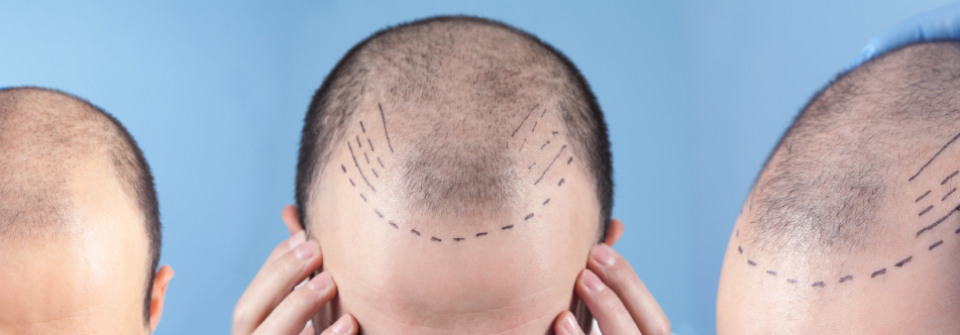
For advanced baldness or permanent thinning, hair transplant procedures may provide long-lasting restoration.
Modern hair restoration treatments can significantly improve scalp coverage and hair density when started early.
Tips to Prevent Hair Fall and Hair Loss
To maintain healthier hair:
- Eat a protein-rich balanced diet
- Manage stress effectively
- Avoid tight hairstyles
- Reduce heat styling
- Maintain scalp hygiene
- Sleep adequately
- Avoid excessive chemical treatments
- Address deficiencies early
Healthy lifestyle habits play a major role in maintaining long-term hair health.
When Should You Consult a Hair Specialist?
You should seek professional advice if:
- Hair shedding lasts longer than 2–3 months
- Bald patches appear
- Scalp visibility increases
- Hairline keeps receding
- Hair density reduces significantly
- Hair does not regrow properly
Early treatment can help prevent further progression and improve recovery outcomes.
FAQs
1. What is the main difference between hair fall and hair loss?
2. How much hair fall is normal in a day?
Losing around 50–100 hair strands daily is considered normal as part of the natural hair growth cycle.
3. Can hair fall become permanent hair loss?
Yes, untreated or prolonged hair fall caused by stress, nutritional deficiencies, or hormonal imbalance can eventually contribute to chronic hair loss.
4. How do I know if I have hair fall or hair loss?
If your hair grows back naturally and shedding is temporary, it is likely hair fall. Visible scalp exposure, receding hairlines, or persistent thinning may indicate hair loss.
5. What are the common causes of hair fall?
Hair fall is commonly caused by stress, lack of sleep, poor nutrition, seasonal changes, excessive heat styling, and hormonal fluctuations.
6. What causes permanent hair loss?
Permanent hair loss is often linked to genetics, hormonal imbalance, thyroid disorders, autoimmune conditions, ageing, or medical conditions affecting the scalp and hair follicles.
7. Can stress cause hair loss?
Yes, chronic stress can disrupt the hair growth cycle and trigger excessive shedding or stress-related hair loss conditions like telogen effluvium.
4. How do I know if I have hair fall or hair loss?
If your hair grows back naturally and shedding is temporary, it is likely hair fall. Visible scalp exposure, receding hairlines, or persistent thinning may indicate hair loss.
8. Which treatment is best for hair loss?
The best treatment depends on the underlying cause and severity. Common options include PRP therapy, GFC treatment, medications, scalp therapies, and hair transplant procedures.
9. When should I consult a hair specialist?
You should consult a specialist if hair shedding continues for several months, scalp visibility increases, bald patches appear, or hair regrowth becomes limited.
10. Which is the best hair loss treatment in Bangalore?
The ideal hair loss treatment depends on your scalp condition and hair concerns. At Livglam, advanced PRP, GFC, scalp therapies, and personalized hair restoration treatments are designed to improve hair density and scalp health naturally.
Final Thoughts
Understanding the difference between hair fall and hair loss is essential for choosing the right treatment and protecting long-term scalp health. While temporary hair fall often improves with lifestyle changes and proper care, persistent hair loss may require medical evaluation and advanced hair restoration treatments.
If you are experiencing excessive shedding, thinning hair, or visible scalp exposure, early diagnosis can make a significant difference in preventing further progression.
At Livglam, we offer advanced hair care and hair loss treatments in Bangalore, including PRP, GFC, scalp therapies, and personalized hair restoration solutions designed to improve scalp health, strengthen follicles, and restore natural-looking hair density.
About the Author

Dr. Harish B (B.D.S, F.A.M, F.H.T, MBA-HM)
Dr. Harish B is a dedicated Aesthetic Physician and Cosmetologist with over a decade of experience in advanced skin, face, body, hair, and laser treatments. Recognised as one of Bangalore’s leading aesthetic experts, he has trained dermatologists and plastic surgeons across India in Botox and dermal filler techniques for a top global manufacturer.
His expertise is internationally recognised, having attended the prestigious AMWC Conference in Monte Carlo and completed advanced training programs in Singapore and Dubai. Known as a Celebrity Aesthetic Physician, Dr. Harish has worked with numerous South Indian film personalities while maintaining a patient-first approach that blends artistry with medical precision.
Dr. Harish holds fellowships in aesthetics and hair transplantation and has trained under renowned dermatologists and celebrity plastic surgeons. At Livglam, he is committed to delivering safe, effective, and personalised treatments while ensuring every patient’s journey is smooth, comfortable, and results-driven.
Recent Blogs







Book your slot to know things about laser treatment!
Just a click away to experience high quality aesthetic treatments.
