New skin tags often follow weight gain, pregnancy or extra friction from clothes and jewellery. Diabetes and insulin resistance can also make more of them grow. The AAD says that suddenly getting many skin tags is rare, but it can be a sign that something is going on inside the body, so see a doctor.
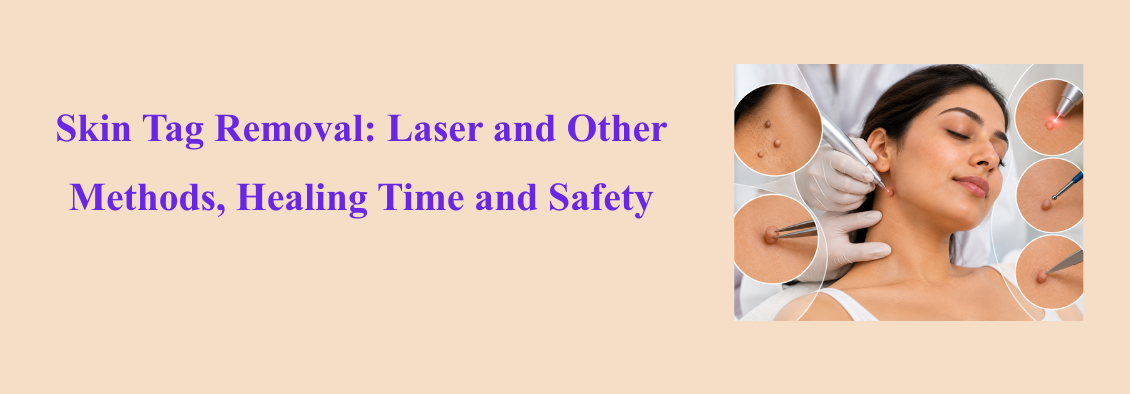
Skin Tag Removal: Laser and Other Methods, Healing Time and Safety
Skin tag removal is a short clinic procedure. A doctor numbs the skin, then cuts, freezes, burns or lasers off a small, soft flap of skin. It usually takes a single visit. Skin tags are harmless, so most people remove them because they catch on clothes and chains, or because they don't like how they look.
Skin tags are very common. About 46% of people have them, and they get more common with age. In India, the things that make skin tags more likely are common too. A national ICMR-INDIAB study published in 2023 estimated that 101 million Indians have diabetes and another 136 million have prediabetes. Below, Dr. Harish B of Livglam Aesthetic Clinic, Jayanagar, Bangalore, explains what causes skin tags, how to remove skin tags safely, how long healing takes and why home kits are a bad idea.
What Is a Skin Tag?
A skin tag is a small, soft, harmless growth that hangs off the skin, often on a thin stalk. Doctors call it an acrochordon. It is usually the same colour as your skin or a little darker. Skin tags grow where skin rubs or folds, such as the neck, underarms, eyelids, under the breasts and around the bottom.
A few quick facts:
- Skin tags range from about 2 mm to 5 cm, says the NHS (page reviewed in 2023).
- About 46% of people have skin tags, and the number rises with age, according to StatPearls (2023).
- A true skin tag is harmless. But a wart, or even a skin cancer, can look like one, so get any growth you are unsure about checked by a doctor.
- Once a skin tag is removed, it does not usually come back. You can still get new ones in other places.
What Causes Skin Tags?
Skin tags grow where skin keeps rubbing against skin, clothing or jewellery. You are more likely to get them if you are overweight, pregnant, have diabetes or metabolic syndrome, or have a blood relative with skin tags. Doctors think insulin resistance, where the body stops responding well to insulin, makes more of them grow.
The American Academy of Dermatology (AAD) lists the usual spots: neck creases, underarms, eyelids, the groin and under the breasts. The NHS adds that hormone changes in pregnancy, and severe insulin resistance in type 2 diabetes, are both thought to make more skin tags grow.
This matters in India. The same ICMR-INDIAB survey found that 11.4% of Indians have diabetes, 15.3% have prediabetes and 39.5% carry extra fat around the waist. Those are the same risk factors the AAD links to skin tags.
Why Are Skin Tags So Common on the Neck?
Your neck has natural folds that rub every time you turn your head. Collars, gold chains and office ID lanyards rub the same spots all day. That steady friction is why skin tags on the neck and underarms are so common.
Skin Tag, Wart or Mole: How Can You Tell?
A skin tag is soft and often hangs off the skin. A wart is firm and rough, and is more common on the hands and feet. A mole is usually flat and round or oval, and is often brown. Moles tend to appear on skin that gets sun. If any growth bleeds, grows or changes colour, see a doctor.
| Feature | Skin tag | Wart | Mole |
|---|---|---|---|
| How it looks and feels | Soft, often hangs from a stalk, skin-coloured or a little darker | Firm and raised, with a rough surface | Usually flat, round or oval, pink to dark brown |
| Where it shows up | Neck, underarms, eyelids, under the breasts | Hands and feet | Skin that gets sun |
| Will wart remover help? | No. It can scar or irritate the skin | Warts are hard and need strong medicine | No. A doctor should check any mole that changes |
The last row trips people up most. Wart remover is made for hard warts, so the AAD warns it can scar or irritate a soft skin tag.
How to Remove Skin Tags Safely: 5 Methods Doctors Use
Doctors remove skin tags in one short clinic visit, usually after numbing the skin. They may snip the tag off, freeze it with liquid nitrogen, burn it with a fine electric needle, or use radiofrequency or a laser. The method depends on the tag's size and where it is, for example near the eye.
1. Snipping (excision)
The doctor numbs the spot, cuts the tag off with sterile scissors or a blade, and stops any bleeding. The tag is gone before you leave. In Cleveland Clinic's April 2026 guide, dermatologist Dr. Pamela Ng says she likes this method best because it is clean and quick.
2. Freezing (cryotherapy)
The doctor freezes the tag with liquid nitrogen, which is extremely cold. The tag falls off on its own about 10 to 14 days later. Freezing can inflame the skin around it, and a bigger tag may need more than one session.
3. Burning with a fine needle (electrodesiccation)
A tiny needle carries an electric current that burns the tag off and stops bleeding at the same time. A scab forms on the spot. The AAD says it heals in one to three weeks.
4. Radiofrequency
Radiofrequency uses radio-wave energy through a fine probe to cut through the tag. Livglam's treatment page says it creates very little heat compared with older electric cautery, so the skin around the tag is barely touched.
5. Laser
A carbon dioxide (CO2) laser heats the tag and removes it layer by layer. The next section explains how it works and what to expect.
How Does Laser Skin Tag Removal Work?
In laser skin tag removal, the doctor numbs the skin with a cream and then points a CO2 laser at the tag. The beam burns the tag away with great precision. At Livglam Aesthetic Clinic, Jayanagar, Bangalore, a small scab forms and drops off in about 5 to 10 days. The pink skin underneath then fades back to your normal colour.
CO2 is an ablative laser, which means it removes tissue instead of just heating it. It is the same type of laser used for deep resurfacing, which our post on laser skin resurfacing explains.
Livglam's treatment page lists a procedure time of 30 to 45 minutes, with a numbing cream and no downtime. It also says the laser's precision matters most on the face and around the eyes, where you want as little damage to nearby skin as possible. No single skin tag removal method is best for everyone. A large tag may suit snipping. Several small tags on the face may suit a laser. Your doctor should explain the choice for your skin.
Do Skin Tag Removal Creams and Home Remedies Work?
Doctors advise against them. The AAD says the US FDA has not approved any product for removing skin tags at home, and the FDA warns people not to use them. Creams and patches can cause redness, burning and skin ulcers. Freeze kits can damage the skin around the tag.
Cleveland Clinic's 2026 guide lists the usual home options and what can go wrong:
- A skin tag removal cream or patch can take a week or longer and may cause irritation, burning or open sores.
- Freeze kits sold for warts are weaker than a doctor's liquid nitrogen and can hurt the skin nearby.
- Apple cider vinegar can irritate the skin or even cause a chemical burn.
- Tea tree oil often causes an allergic rash and can take weeks to show any change.
The NHS also says not to cut or tie off a skin tag yourself unless a doctor tells you to. The risks are infection, bleeding and scarring.
Many people search for a way to remove skin tags in one night. There isn't a safe one. The fastest safe option is a doctor, who can remove most tags in a single visit.
What Happens After Skin Tag Removal?
Healing is usually quick. A snipped tag is gone the same day. A frozen tag drops off in 10 to 14 days, and a spot treated with an electric needle heals in one to three weeks. After laser removal at Livglam, the scab falls off in about 5 to 10 days. Infections are rare when a doctor does it.
| Method | What happens next | How long it takes |
|---|---|---|
| Snipping | The tag is gone. You may need a small bandage | Same day |
| Freezing | A blister or scab forms, then the tag falls off | 10 to 14 days |
| Electric needle | A scab forms and heals | 1 to 3 weeks |
| CO2 laser at Livglam | A small scab forms, then the pink skin fades | Scab drops off in 5 to 10 days |
Aftercare is simple. Follow the steps your doctor gives you, which usually look like this:
- Keep the bandage on for as long as your doctor says.
- For the first day or two, wash the spot gently with soap and water and put on a fresh bandage.
- Use an antibiotic ointment only if your doctor tells you to.
- Don't pick at the scab. Let it fall off on its own.
- Keep collars, chains and lanyards off the spot while it heals.
On brown skin, the spot can turn darker for a while after removal. The NHS says this darkening, called hyperpigmentation, is usually temporary but can sometimes be permanent, especially on black or brown skin. Ask your doctor how to lower the risk for your skin tone. If a dark mark stays, our guide to deep pigmentation and melasma explains the options.
Skin Tag Removal in Bangalore: What to Expect at a Clinic
In Bangalore, skin tags are removed as a short day procedure at a skin or aesthetic clinic, and you go home the same day. The doctor first checks that the growth really is a skin tag. Then they numb the area, remove it and explain aftercare. At Livglam Aesthetic Clinic in Jayanagar, doctors use a CO2 laser, radiofrequency or excision.
Before you pick a clinic, check a few things:
- Look up the doctor's registration on the National Medical Commission's Indian Medical Register.
- Ask which method they plan to use and why it suits your tag's size and spot.
- Ask what happens if the growth does not look like a normal skin tag. It may need to be tested first.
- Ask how to protect the healing spot in the monsoon, when collars and lanyards stay damp with sweat.
- Ask about the chance of dark marks on your skin tone.
When Should You See a Doctor About a Skin Tag?
See a doctor if a skin tag bleeds, hurts, grows, changes colour or keeps catching on clothes or jewellery. Also go if a tag on your eyelid gets in the way of your sight, or if lots of new tags appear in a short time. The NHS and the AAD both say these signs need a proper check.
If none of these apply, you can leave a skin tag alone. Removing one is a choice, not a must. If you are in Bangalore and want a doctor to look at a skin tag, you can read about skin tag removal in Bangalore at Livglam.
Frequently asked questions
1. Why am I getting skin tags all of a sudden?
2. How to remove skin tags in one night?
There is no safe way to remove a skin tag overnight at home. Creams, freeze kits and home remedies take days or weeks, and they can burn or scar the skin. A doctor can remove most skin tags in one short visit after numbing the area, which makes it the fastest safe option.
3. Do skin tags go away on their own?
Skin tags usually stay unless they are removed. They are harmless, so you don't have to treat them. But if a tag gets twisted, irritated or starts bleeding, Cleveland Clinic advises having it checked by a doctor rather than pulling or cutting it off at home.
4. Can skin tags be cancerous?
A true skin tag is harmless and is not cancer. The trouble is that some skin cancers and warts can look like skin tags. That is why the AAD advises seeing a dermatologist about any growth you are not sure of, especially one that bleeds, grows quickly or changes colour.
5. Is skin tag removal painful?
Most people feel very little, because the doctor numbs the area first with a cream or a small injection. Cleveland Clinic says clinic removal is meant to be quick and painless. Some tenderness and redness for a few days afterwards is normal while the spot heals.
6. Are skin tags a sign of diabetes?
They can be. Skin tags are more common in people with type 2 diabetes, prediabetes and insulin resistance, but many people with skin tags have normal blood sugar. If you have lots of skin tags, especially with dark, velvety patches on your neck, ask your doctor about checking your blood sugar.
7. Do skin tags grow back after removal?
A skin tag that has been removed does not usually grow back, according to the NHS. But the NHS also says skin tags cannot be prevented. So new ones can still appear in other spots later, especially where skin rubs against skin or clothing.
Final Thoughts
Skin tags are common and harmless, and you remove one for comfort or looks. Skin tag removal in a clinic is quick, and most spots heal within a few weeks. Home creams, freeze kits and DIY cutting are where the real risks are: burns, infection and scars.
If a skin tag bothers you, or one starts to bleed or change, get it checked by a registered doctor. Ask which method they will use, how long healing takes and how to avoid dark marks on your skin.
Sources
- American Academy of Dermatology. Skin tags: Why they develop, and how to remove them. Last updated October 2022. https://www.aad.org/public/diseases/a-z/skin-tags
- NHS. Skin tags. Page last reviewed April 2023. https://www.nhs.uk/conditions/skin-tags/
- Cleveland Clinic. How to get rid of skin tags. Published April 2026. https://health.clevelandclinic.org/skin-tag-removal
- StatPearls, NCBI Bookshelf. Acrochordon. Last updated August 2023. https://www.ncbi.nlm.nih.gov/books/NBK448169/
- Anjana RM and others. Metabolic non-communicable disease health report of India: the ICMR-INDIAB national cross-sectional study (ICMR-INDIAB-17). The Lancet Diabetes and Endocrinology, 2023. https://pubmed.ncbi.nlm.nih.gov/37301218/
Author:
By Dr. Harish B (B.D.S, F.A.M, F.H.T, MBA-HM), Aesthetic Physician and Cosmetologist, Livglam Aesthetic Clinic, Jayanagar, Bangalore.
Recent Blogs




Book your slot to know things about laser treatment!
Just a click away to experience high quality aesthetic treatments.
