Light lower-body exercise is generally permitted around weeks 3 to 4. Full upper-body training, including chest exercises, is typically cleared at 6 weeks. Your surgeon's clearance—not a general timeline—is what matters. Returning too early risks disrupting healing tissue and affecting your final contour.
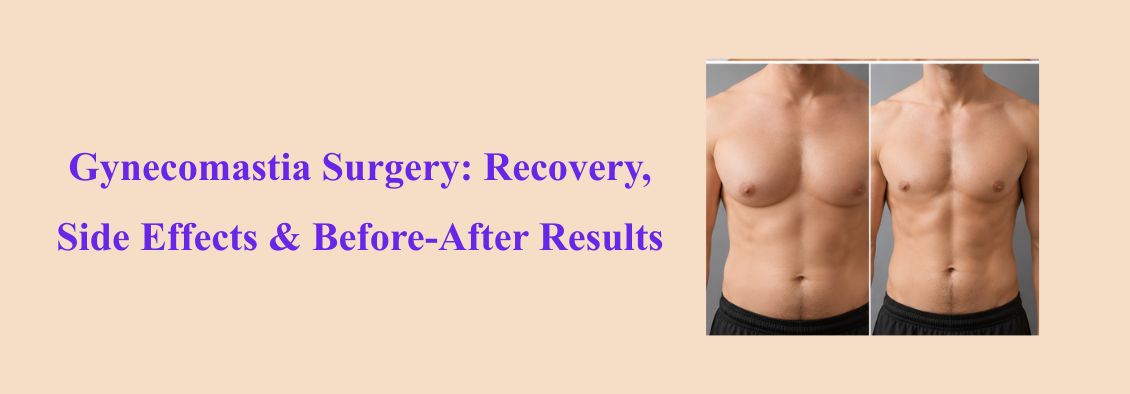
Gynecomastia Surgery: Recovery, Side Effects & Before-After Results
Deciding to undergo gynecomastia surgery - male chest reduction - is a significant step. For many men, it marks the end of years of self-consciousness about clothing choices, gym visits, and intimate moments. But the decision itself is only the beginning. What happens after surgery matters just as much as the procedure itself.
This guide answers the questions men most commonly ask after choosing to proceed: What does recovery actually involve? What side effects are normal, and which ones need attention? What will the results look like, and how permanent are they?
If you are in the research phase, reading this now means you'll be mentally and practically prepared - and that preparation directly improves your outcome.
What the First 48 Hours Look Like
Gynecomastia surgery is typically performed under general anaesthesia or sedation, and 91% of patients go home the same day after male breast reduction surgery - making it a day-procedure for most men.
When you return home, here is what to expect in the immediate window:
Discomfort and tightness: The chest area will feel sore, tight, and tender. Patients may experience pain, tightness, or tenderness in their chest immediately following surgery, which can be managed through prescription pain medication when necessary. Most men describe it as a strong muscular soreness rather than sharp pain.
Dressings and compression garment: A compression vest or chest wrap will be applied over dressings. This garment is not optional - it is critical for reducing swelling, supporting healing tissue, and shaping the final contour. You will wear it continuously for several weeks.
Drainage tubes (if applicable): For more extensive procedures, small drainage tubes may be placed around the incision sites to prevent fluid accumulation. These are removed at your first follow-up visit.
Anaesthesia effects: Some patients experience nausea from the anaesthesia in the first few hours. This is normal and resolves within 24 hours.
Rest is essential: Sleep on your back with your upper body slightly elevated. Avoid rolling onto your side for the first several days, as pressure on the chest disrupts healing tissue and increases bruising asymmetry.
Week-by-Week Recovery Timeline
On average, the total recovery time from gynecomastia surgery lasts 4 to 6 weeks, though daily comfort significantly improves well before that milestone.
Week 1: Swelling, Bruising, and Rest
During the first week, expect soreness, swelling, and bruising. These symptoms are normal and typically subside within 2 to 4 weeks.
Bruising can range from minimal to significant and may be confined to the chest area or extend to the abdomen. It typically increases over the first 3 to 4 days before fading to a yellowish tone over the following week. Discoloration usually disappears within 2 to 3 weeks.
The chest will look swollen and results will not yet be visible. This is expected - do not judge your outcome during this phase.
What you can do:
- Light walking around the home (helps circulation and reduces clotting risk)
- Shower from day two onwards, avoiding direct water on incision sites
- Take prescribed antibiotics and pain medication on schedule
What to avoid:
- Lifting anything above your head
- Driving (until off prescription pain medication)
- Alcohol and smoking (both significantly impair healing and graft survival)
Week 2: Noticeably More Comfortable
Patients with sedentary jobs can often return to work within 3 to 4 days. Those with physically demanding jobs may need 1 to 2 weeks off, depending on individual healing and job requirements.
Most men find week two markedly more manageable than week one. Bruising has begun to fade, acute soreness transitions to mild tenderness, and the compression garment becomes more tolerable. The chest still looks swollen, but you will begin to notice early signs of a flatter contour.
You can begin light activity - short walks, gentle stretching - but any movement that engages the chest or involves raising the arms should still be avoided.
Weeks 3–4: Gradual Return to Normal Activity
Swelling continues its downward trajectory. The compression garment may be transitioned to a lighter version depending on your surgeon's assessment. Incision sites begin to close more fully, and sensitivity returns in stages.
Light activities can usually be resumed after a few days, but strenuous exercise and heavy lifting should be avoided for at least 2 to 3 weeks. For most surgeons, clearance for light gym activity (lower body, no chest engagement) comes around the 3 to 4 week mark.
Weeks 5–6: Cleared for More Activity
By week six, the majority of men have received clearance for full physical activity including upper-body exercise. The chest contour becomes increasingly apparent as residual swelling resolves. Incision scars are present but beginning to mature and soften.
This is also when many men experience a significant emotional shift - as the chest shape becomes clearer, the reality of the transformation begins to register.
Month 3–6: Final Results Emerge
While initial improvements are noticeable soon after surgery, final results including resolution of swelling and optimal chest contour may take several months to fully manifest.
Scar maturation continues during this period - scars typically progress from pink and raised to flat and faded between months 3 and 12. Final assessment of your surgical outcome should be made at the 6-month mark, not earlier.
Side Effects: What Is Normal, What to Watch
Understanding the difference between expected post-operative effects and genuine warning signs is essential for peace of mind and safety.
Normal Side Effects
- Swelling and fluid retention: Residual swelling is the most significant obstacle to seeing early results. It is normal for the chest to look larger than expected in the first month - the swollen tissue conceals the new contour beneath. This resolves progressively.
- Bruising: As noted above, bruising is universal and can be more pronounced than patients expect. The discoloration typically disappears within 2 to 3 weeks.
- Numbness and altered sensation: A decrease in sensation in the area around the operated wound is a common side effect, particularly in patients who require significant liposuction. Most men find temporary loss of sensation to be insignificant, and sensation returns within a year for most.
- Asymmetric swelling: Uneven swelling or bruising, or burning sensations on one side, are among the most common side effects during the healing process. This is driven by natural variations in muscle tension, skin elasticity, and fluid retention on each side - not by surgical error. Asymmetry at week two is not asymmetry at month six.
- Temporary skin irregularities: In some patients with diminished elasticity, there may be excess skin or skin creases that appear more noticeable after surgery. Most of these creases will persist for 6 to 12 months and then diminish significantly, and loose skin usually tightens.
- Scar tissue formation: It is possible for scar tissue to form in the treatment area, manifesting as small lumpy or bumpy areas in the chest. While rare, this side effect can be addressed by your surgeon if needed.
- Temporary indentations: Indentations in the chest when flexing muscles can appear in the early healing phase. Most indentations resolve naturally within a few months and typically require no treatment.
Warning Signs That Require Immediate Medical Attention
Contact your surgeon immediately if you notice:
- Fever above 38.5°C (101°F)
- Excessive bleeding that soaks through dressings
- Severe pain that does not respond to prescribed medication
- Signs of infection at the incision site: redness spreading beyond the wound, warmth, swelling with foul discharge
- Sudden asymmetry or rapid swelling on one side
- Shortness of breath or chest pain unrelated to the surgical site
Regular follow-up appointments at one week, one month, three months, and six months allow your surgeon to monitor progress and address concerns before they become problematic. Attend every scheduled follow-up, even when you feel fine.
Before and After: What Results Actually Look Like
The Immediate Change vs. the True Result
There is an important distinction between the result you see immediately after surgery and your final outcome. In the days following the procedure, the chest will still appear swollen and may not look dramatically different. You will be able to notice the results immediately after the surgery, however the swelling will still be quite pronounced for the first few days post-surgery.
The genuine transformation unfolds progressively. By month three, the chest contour is clearly visible. By month six, most patients are seeing their full result - a flatter, firmer chest with significantly reduced tissue bulk.
What a Successful Result Includes
- A flatter, more masculine chest contour
- Reduced or eliminated projection from the areola region
- Improved symmetry between both sides
- A natural chest appearance without visible signs of the procedure once scars mature
- Freedom from the physical self-consciousness that drove the decision to seek treatment
How Long Do Results Last?
Yes, gynecomastia surgery delivers long-lasting and often permanent results. When the original cause is resolved and the body remains hormonally balanced, the risk of recurrence is extremely low. Most men maintain their results for years, even decades, after the procedure.
For most men, the procedure offers permanent removal of excess tissue for 90% of patients, alongside restored masculine chest contour and improved self-confidence and body image.
What Can Cause Recurrence?
While rare, recurrence is possible under specific circumstances. Only 12.5% of patients experience recurrence of gynecomastia after surgery. The key triggers include:
- Hormonal shifts: Certain lifestyle choices and health conditions can influence the durability of the outcome. If you experience another hormonal shift after surgery due to medication, illness, or aging, it could trigger new tissue growth.
- Anabolic steroids and supplements: Anabolic steroids and certain muscle-building supplements can significantly disrupt hormone balance. If used after surgery, they may lead to recurrence, especially if the original gynecomastia was steroid-induced.
- Significant weight gain: Excessive weight gain can lead to fat accumulation in the chest area. While this is not true gynecomastia, it can mimic the appearance and reduce the definition achieved with surgery - this condition is called pseudogynecomastia.
- Underlying health conditions: Thyroid disorders, liver disease, or low testosterone can contribute to new tissue growth if not managed alongside surgery.
How to Protect Your Results Long-Term
The habits you maintain after surgery directly determine the longevity of your outcome:
- Maintain a stable weight. Significant fluctuations - in either direction - affect chest tissue and the definition of results. A consistent, healthy weight is the most important lifestyle factor in preserving your outcome.
- Avoid anabolic steroids entirely. This is non-negotiable for anyone who has undergone gynecomastia surgery, regardless of fitness goals.
- Review medications with your doctor. Some prescription medications are known to elevate estrogen or suppress testosterone. If any are part of your long-term care, discuss alternatives or monitoring strategies.
- Attend follow-up care. Consistent follow-up care with your plastic surgeon ensures optimal healing and addresses any concerns that arise during recovery. Monthly self-examination allows you to monitor your chest contour and identify any changes early.
- Quit smoking before and after surgery. Smoking impairs wound healing, increases infection risk, and reduces skin tightening. Surgeons typically require cessation for at least 4 to 6 weeks around the procedure.
Frequently Asked Questions
1. When can I go back to the gym after gynecomastia surgery?
2. Will people be able to see my scars?
Incision placement is designed to follow natural chest contours and, where applicable, the areolar border—areas where scars are least visible. Scars fade progressively over 6 to 12 months. With proper sun protection and scar care (such as silicone gel, when recommended by your surgeon), most patients find their scars are barely noticeable within a year.
3. My chest looks uneven at 3 weeks—should I be worried?
Asymmetric swelling in the first 4 to 6 weeks is extremely common and not an indicator of the final result. Each side heals at its own pace due to differences in tissue density, blood supply, and fluid retention. Surgical symmetry is assessed at 3 to 6 months—not during active recovery.
4. Can gynecomastia come back if I gain weight after surgery?
True glandular gynecomastia—the enlarged breast tissue that surgery removes— does not return with weight gain alone. However, significant fat accumulation in the chest area can create a similar appearance (pseudogynecomastia). Maintaining a stable weight helps preserve the definition of your results.
5. How painful is recovery, really?
Most patients describe the discomfort as a strong muscular soreness rather than sharp surgical pain. The first 3 days are typically the most uncomfortable, and pain levels reduce significantly from day 4 onwards. Prescription pain relief is available during the initial recovery period, and many patients transition to over-the-counter medication by the end of the first week.
The Honest Bottom Line
Recovery from gynecomastia surgery is manageable - not painless, but well-tolerated by the vast majority of patients. The first week demands rest and care; by week four, most men are back to daily life; by month six, the final result speaks for itself.
With only a 4.4% complication rate within the first 30 days according to recent research involving nearly 5,000 patients, most men experience smooth recoveries when they follow their surgeon's guidelines carefully.
The men who are most satisfied with their outcomes are the ones who understood the timeline going in, followed their post-operative instructions, and gave their body the full recovery period it needed. The transformation is real and lasting - it simply requires patience.
Considering gynecomastia surgery? Learn more about gynecomastia treatment at Livglam or explore our full gynecomastia surgery in Bangalore page to understand the procedure, techniques, and next steps.
About the Author

Dr. Harish B (B.D.S, F.A.M, F.H.T, MBA-HM)
Dr. Harish B is a dedicated Aesthetic Physician and Cosmetologist with over a decade of experience in advanced skin, face, body, hair, and laser treatments. Recognised as one of Bangalore’s leading aesthetic experts, he has trained dermatologists and plastic surgeons across India in Botox and dermal filler techniques for a top global manufacturer.
His expertise is internationally recognised, having attended the prestigious AMWC Conference in Monte Carlo and completed advanced training programs in Singapore and Dubai. Known as a Celebrity Aesthetic Physician, Dr. Harish has worked with numerous South Indian film personalities while maintaining a patient-first approach that blends artistry with medical precision.
Dr. Harish holds fellowships in aesthetics and hair transplantation and has trained under renowned dermatologists and celebrity plastic surgeons. At Livglam, he is committed to delivering safe, effective, and personalised treatments while ensuring every patient’s journey is smooth, comfortable, and results-driven.
Recent Blogs








Book your slot to know things about laser treatment!
Just a click away to experience high quality aesthetic treatments.
