Hair Transplant Before and After vs Natural Hair Loss Treatment: What's Realistic?
Two people walk into a clinic with the same receding hairline. One walks out booked for a transplant. The other walks out with a prescription and a six-month plan. Both can end up happy - but only if someone told them the truth about what each option actually does.
That truth gets buried under before-and-after photos. A transplant "after" shot looks like a cure. A "natural treatment" review promises regrowth from a bottle. Neither tells you what your own scalp will realistically do, because the honest answer depends on why you're losing hair in the first place.
Here's how the two approaches actually compare, and how to tell which one fits your situation.
What a hair transplant before-and-after really shows
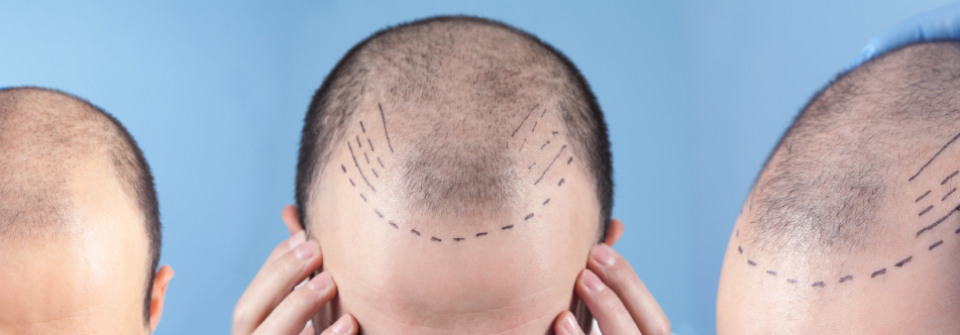
A Hair transplant treatment moves hair you already have to a spot where you've lost it. Surgeons take follicles from the back and sides of your head - the donor zone, which is genetically resistant to balding - and place them into thinning or bald areas. The dramatic "after" photo is real, but it's showing redistribution, not new growth. You end the procedure with the same total number of hairs you started with, arranged differently.
That's why the timeline matters more than the photo. Transplanted follicles shed within the first few weeks (this is normal and expected), then stay dormant for two to three months. Visible regrowth starts around month three to four. The result you see in a polished before-and-after image is usually the 9-to-12-month mark. Anyone showing you a transformation at four weeks is showing you something that hasn't happened yet.
For the right candidate - stable donor supply, realistic coverage goals, hair loss that has plateaued - a transplant delivers a permanent change that no cream or tablet can match. The moved follicles keep their donor-zone genetics, so they generally don't fall out the way your native hairline did.
What natural hair loss treatment can and can't do
"Natural treatment" covers a wide range, and the honesty gap is widest here. Some of it works. Some of it does nothing but drain your wallet for eight months while your hairline keeps moving.
Minoxidil and finasteride are the two treatments with real clinical backing. Minoxidil (the topical solution) extends the growth phase of existing follicles and can thicken miniaturised hair. Finasteride (an oral tablet, for men) blocks the hormone DHT that shrinks follicles in male pattern baldness. Neither builds a new hairline. What they do is slow the loss and, in many cases, recover ground on hair that was thinning but not yet dead.
The realistic outcome from medical treatment is stabilisation plus partial regrowth - fuller coverage where follicles were still alive, and a slower decline everywhere else. It works best early, before follicles have miniaturised past the point of return. Start at the first sign of thinning and you protect what you have. Start after ten years of steady loss and there's far less left to save.
Then there's the rest of the "natural" category - rosemary oil, onion juice, biotin gummies, scalp massages. A few have thin evidence for marginal improvement in specific cases. Most do not regrow a receded hairline, and no amount of oil will restore a follicle that has already closed. Treating advanced baldness with supplements is the most common way people waste the window where medical treatment would still have worked.
The comparison that actually matters
Stop comparing the photos. Compare what each option does to the underlying problem.
A transplant is a one-time surgical fix for permanent loss you've already sustained. It gives you coverage in bald zones but does nothing to protect the native hair around the transplant, which can keep thinning if the cause is still active. This is why surgeons often keep patients on medical treatment after a transplant - to hold onto the hair they weren't operating on.
Medical treatment is an ongoing maintenance plan for hair that's still alive. It protects and partially recovers, but the effect lasts only as long as you keep using it. Stop finasteride and the DHT resumes its work; the hair you saved starts thinning again within months.
So they're not really rivals. They solve different halves of the same problem. Transplant handles what's already gone. Treatment protects what's left. Many people end up needing both, in sequence.
Which one is realistic for you
It comes down to three things: how much you've lost, whether it's still progressing, and how much donor hair you have.
If you're in the early stages - diffuse thinning, a slightly higher hairline, hair that's finer than it used to be - medical treatment is almost always the first move. It's cheaper, non-surgical, and it works best exactly when your loss is still early. Rushing to a transplant while your native hair is still actively thinning often means a second surgery later, chasing a receding line.
If your loss has plateaued and you have defined bald areas - a hairline that receded years ago and stopped, or a stable crown - a transplant becomes the option that can actually put hair back where treatment can't. The key word is stable. Transplanting into an area that's still losing hair rapidly leaves you with islands of transplanted hair surrounded by ongoing thinning.
If you're somewhere in between, the honest answer is that you need someone to look at your scalp before recommending either. Donor density, the pattern of loss, your age, and family history all change the calculation. A before-and-after photo of a stranger tells you nothing about your own follicles.
Getting an honest assessment
The decision isn't a transplant or treatment. It's figuring out what stage your hair loss is in, and matching the approach to it - often using both. That starts with a diagnosis, not a sales pitch.
At Livglam Aesthetic Clinic in Jayanagar, Bangalore, Dr. Harish B (B.D.S, F.A.M, F.H.T) assesses the actual state of your follicles - donor supply, pattern, and whether the loss is still active - before recommending anything. Some patients leave with a treatment plan and no surgery. Some are better served by a transplant. The point of the consultation is to tell you which one you are, honestly, so you spend your money on the thing that will actually work for your scalp.
Book a consultation to find out what's realistic for your hair loss, before you commit to either path.