Glutathione injections are primarily used for skin lightening, reducing pigmentation and dark spots, improving overall skin radiance, and supporting the body's antioxidant and detoxification functions. They are also used clinically in some liver and immune support contexts, always under medical supervision.
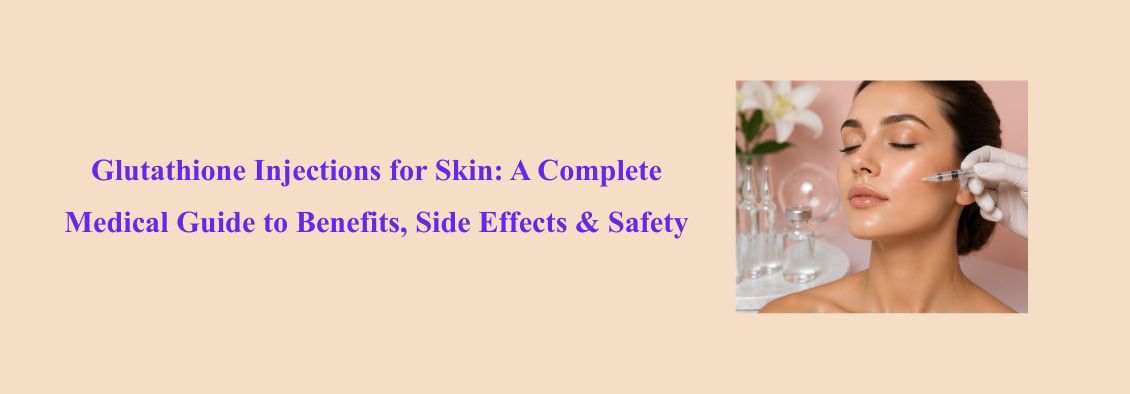
Glutathione Injections for Skin: A Complete Medical Guide to Benefits, Side Effects & Safety
Glutathione has attracted significant attention in dermatology -but separating clinical evidence from marketing claims is genuinely difficult. If you are researching whether glutathione injections are suitable for you, this guide is written for that purpose. We have drawn on peer-reviewed literature and the clinical experience of our dermatology team to give you an honest, balanced picture before you make any decisions.
What Is a Glutathione Injection and How Does It Work?
Glutathione's Role in the Body
Glutathione (GSH) is a tripeptide, a molecule assembled from three amino acids: glutamine, cysteine, and glycine. Your body produces it naturally, primarily in the liver, where it functions as one of the most important antioxidants in human biology.
Its primary role is neutralising free radicals - unstable molecules that damage cells, accelerate visible ageing, and contribute to various diseases. It also plays a central role in liver detoxification, immune system regulation, protein synthesis, and the recycling of other antioxidants including vitamins C and E.
As we age, glutathione levels naturally decline. Chronic stress, poor nutrition, illness, and prolonged exposure to environmental toxins all accelerate this process. This is partly why supplementation has drawn interest from both the wellness and dermatology communities.
The skin lightening mechanism: Glutathione influences pigmentation by inhibiting tyrosinase, the enzyme that catalyses melanin production. By moderating eumelanin (dark pigment) and favouring pheomelanin (lighter pigment), it may contribute to a more even skin tone over time. It is important to note that this mechanism, while biologically plausible, is not yet validated by large-scale controlled trials, and individual results vary considerably depending on baseline melanin levels, skin type, and dosage.
IV Delivery vs Oral Supplements - What Is the Actual Difference?
Oral glutathione supplements have limited bioavailability because much of the compound breaks down in the gastrointestinal tract before reaching the bloodstream. This limitation has driven interest in intravenous (IV) delivery, which bypasses digestion entirely.
| Factor | IV Glutathione | Oral Glutathione |
|---|---|---|
| Absorption Rate | High - delivered directly into bloodstream | Lower - significantly reduced by digestive breakdown |
| Speed of Results | Faster (visible change typically in 4–6 sessions) | Takes considerably longer; results are more gradual |
| Dosage Control | Precise - customised per session by a dermatologist | Self-administered; consistency and dosage may vary |
| Medical Supervision | Required - administered in a clinical setting | Not required - available as OTC supplements |
| Cost | Higher, but absorption is more predictable | More affordable, but efficacy is lower |
The IV route offers more predictable dosing and faster onset but carries greater risk if administered by unqualified practitioners or using unregulated formulations. Quality of the product and the administering clinician matter enormously.
What Are the Benefits of Glutathione Injections?
It is important to approach the claimed benefits of glutathione injections with nuance. Some effects have reasonable clinical evidence; others are supported primarily by observational data and patient-reported outcomes rather than large controlled trials.
Skin-Specific Benefits
- Reduction in Hyperpigmentation and Melasma: The most widely cited skin benefit is a reduction in dark spots, uneven skin tone, and melasma. By moderating tyrosinase activity, glutathione can help manage pigmentation conditions. A 2019 systematic review published in the National Library of Medicine identified improvements in skin brightness across several small trials while emphasising the need for larger controlled studies before definitive claims can be made.
- Improvement in Skin Luminosity: Many patients report visible improvement in overall skin glow, particularly after completing a course of 4–6 sessions. This is thought to be partly attributable to the antioxidant load reducing oxidative skin damage at the cellular level.
- Anti-Ageing Support: Glutathione's free radical scavenging activity may help slow the visible appearance of fine lines, improve skin elasticity, and provide some protection against UV-induced damage. It complements - rather than replaces - dedicated anti-ageing treatments.
Session-by-Session - What to Realistically Expect
Individual responses vary based on skin type, dosage, frequency, and baseline glutathione levels. The following represents a general progression observed in clinical practice:
| Session Range | Typical Changes Observed |
|---|---|
| 1–2 Sessions | Mild detoxification effect; slight improvement in skin brightness noted by some patients |
| 3–4 Sessions | More noticeable glow; early reduction in pigmentation in suitable candidates |
| 5–6 Sessions | Visible improvement in skin tone evenness; more pronounced radiance |
| Maintenance Sessions | Sustains results and may gradually extend the duration of improvement |
These timelines are indicative. Some patients see changes earlier; others need more sessions. Your dermatologist will review your response and adjust the plan accordingly.
Wider Health Benefits
Beyond the skin, IV glutathione has been researched for several systemic effects worth understanding:
- Liver support: Glutathione plays a central role in Phase II liver detoxification. IV administration is used in some clinical settings to support liver function in patients with specific conditions - though this is not a reason to self-prescribe.
- Immune function: As a master antioxidant, glutathione supports immune cell production and function, particularly in lymphocytes. Glutathione deficiency has been associated with impaired immune responses in some studies.
- Cognitive support: Some research suggests glutathione may reduce oxidative stress in the brain, potentially supporting cognitive clarity - though evidence at standard cosmetic doses is limited.
- Energy levels: Some patients report improved energy during a treatment course. This is thought to relate to improved mitochondrial function, though direct evidence at cosmetic dosages is limited.
Who Is a Suitable Candidate - and Who Should Avoid This Treatment?
A thorough dermatological assessment is essential before starting any glutathione IV programme. Not every patient is an appropriate candidate, and a responsible clinician will always screen before recommending treatment.
Characteristics of Suitable Candidates
- Adults with uneven skin tone, hyperpigmentation, or melasma who have not responded adequately to topical treatments
- People with dull or sun-damaged skin seeking a non-surgical brightening approach
- Individuals in good general health with no contraindicated conditions
- Patients with realistic expectations who understand results require a course of sessions and maintenance
Who Should Not Have This Treatment
| Avoid If | Reason |
|---|---|
| Pregnant or breastfeeding | Insufficient safety data; potential risk to foetus or infant |
| Kidney or liver disease | IV glutathione may place additional stress on these organs; medical clearance required first |
| Known allergy to glutathione or IV components | Risk of anaphylaxis - a serious and potentially life-threatening reaction |
| Certain medications | Interactions are possible; full medication disclosure to your dermatologist is essential |
| Severe asthma | Some IV formulations may trigger bronchospasm in susceptible individuals |
What Are the Side Effects and Risks of Glutathione Injections?
Side effects are generally mild when treatment is administered by a qualified practitioner using approved, clinical-grade formulations. The risk profile changes significantly with unregulated products, inappropriate dosing, or unsupervised administration - contexts that are unfortunately common in this space.
Common Mild Side Effects
- Injection site discomfort or mild bruising
- Mild headache or nausea, typically resolving within a few hours
- Temporary skin sensitivity in some patients
- Gastrointestinal discomfort - more common with oral formulations than IV
Rare but Serious Risks
Allergic reactions: In rare cases, patients may experience urticaria (hives), angioedema, or - in very rare instances - anaphylaxis. This is why IV treatments should be conducted in a proper clinical setting with qualified staff, emergency protocols, and resuscitation equipment available.
Hepatotoxicity: A review published on PubMed Central (PMC) highlighted concerns about liver stress with prolonged, high-dose glutathione use. This is rare with medically supervised, appropriately dosed treatment courses but underscores why baseline liver function assessment is important before starting.
Excessive skin lightening: In some cases, glutathione may lighten skin more than intended - particularly with aggressive or prolonged dosing beyond what was planned. This is a risk of unregulated use and can be minimised with gradual, supervised titration by a qualified dermatologist.
Peripheral neuropathy (with unregulated products): The WHO has received reports linking nerve damage to high-dose IV glutathione administered without adequate medical oversight, primarily in markets with unregulated products. This is not a documented risk of standard clinical practice with approved formulations and appropriate dosing.
What the Clinical Research Actually Says
The evidence base for glutathione injections is growing but remains incomplete. Existing studies are generally small in sample size and limited in follow-up duration. The professional consensus in dermatology is:
- There is reasonable evidence for short-term brightening effects and antioxidant benefits at the cellular level
- Long-term safety and efficacy data are insufficient to make strong, universal clinical recommendations
- Medical supervision, appropriate dosing, and quality-controlled formulations are the essential safeguards that separate beneficial outcomes from adverse events
WebMD's guide to glutathione provides a useful overview of potential risks and interactions for further reading.
What Happens During a Glutathione IV Session?
Before your session: Your dermatologist will conduct a full skin and health assessment on your first visit. This includes reviewing your medical history, current medications, allergy status, and skin type classification. Baseline photographs are typically taken to track progress objectively. Avoid heavy exercise and excessive sun exposure in the 24 hours before a session.
During the session: A session typically takes 30–45 minutes. An IV cannula is inserted and the glutathione solution - at a concentration and dosage determined by your dermatologist based on your weight, skin condition, and treatment goals - is administered slowly. You may feel mild warmth or faint tingling at the infusion site, which is normal.
After the session: You can resume normal activities immediately. Sunscreen is essential in the days following treatment, as skin sensitivity may be temporarily increased. Your dermatologist will schedule a review to assess your response and adjust the dosage if needed.
How Long Do Glutathione Injection Results Last?
Results from glutathione injections are not permanent. Melanin production is an ongoing biological process, and skin tone will gradually return towards baseline if treatment is discontinued and sun protection is neglected.
Most patients maintain results effectively through a combination of the following:
- Monthly or bi-monthly maintenance IV sessions as recommended by your dermatologist
- Daily use of SPF 30–50 broad-spectrum sunscreen - this is non-negotiable. Sun exposure accelerates repigmentation and counteracts treatment benefits directly.
- A balanced diet and adequate hydration to support the body's own glutathione production
- Complementary topical treatments - vitamin C serums, niacinamide, and prescribed brightening agents can extend results between sessions
The longevity of results varies by individual. Patients with naturally lower baseline melanin levels and those who are diligent about sun protection tend to retain improvements longer.
Frequently Asked Questions About Glutathione Injections
1. What is a glutathione injection used for?
2. Is taking glutathione injections safe?
When administered by a qualified dermatologist in a clinical setting using approved, clinical-grade formulations, glutathione injections carry an acceptable safety profile for most healthy adults. The risks increase significantly with unregulated products, unsupervised self-administration, or inappropriate dosing. A thorough consultation and health assessment before starting treatment is essential.
3. What are the benefits of IV glutathione over oral supplements?
IV delivery bypasses the digestive breakdown that limits oral glutathione absorption, resulting in higher bioavailability. This means IV administration delivers more active glutathione into the bloodstream, typically producing faster and more consistent results. The trade-off is higher cost and the requirement for clinical administration.
4. How long does it take to see results from glutathione injections?
Most patients begin to notice a change in skin brightness after 3–4 sessions. More significant improvements in skin tone evenness and pigmentation reduction are typically visible after a full course of 5–6 sessions. Timelines vary depending on baseline skin type, dosage, and individual response.
5. Are the results of glutathione injections permanent?
No. Results are not permanent. Melanin production continues naturally, and skin tone will gradually return towards its baseline if maintenance sessions are discontinued and sun protection is not maintained. Most patients sustain their results with monthly maintenance sessions and consistent SPF use.
6. What are the side effects of glutathione IV injections?
Common mild effects include nausea, headache, injection site discomfort, and temporary skin sensitivity. Rare but serious risks include allergic reactions (including anaphylaxis in very rare cases), liver stress with prolonged high-dose use, and excessive skin lightening with unregulated dosing. All serious risks are significantly reduced by appropriate medical supervision and clinical-grade formulations.
7. Is glutathione harmful to the kidneys or liver?
At standard, dermatologist-supervised doses, glutathione is not typically harmful to the kidneys or liver in healthy individuals. However, high-dose or prolonged unregulated use has been associated with liver stress in some cases. Patients with pre-existing kidney or liver conditions should not use this treatment without full medical clearance from their physician.
8. What should I avoid when taking glutathione drips?
Avoid excessive sun exposure, heavy alcohol consumption, and smoking during a treatment course—all of these increase oxidative stress and directly counteract the antioxidant benefits. Always disclose your full medication list to your dermatologist before starting, as interactions are possible with certain drugs.
9. How many sessions of glutathione IV do I need?
A standard initial course is typically 6 sessions, spaced 1–2 weeks apart. The exact number depends on your skin condition, treatment goals, and how your skin responds. Your dermatologist will assess your progress and recommend a maintenance schedule thereafter—usually monthly or bi-monthly sessions to sustain results.
10. How long do glutathione injection results last?
With regular maintenance sessions and consistent sun protection, most patients maintain noticeable improvement for 6–12 months or longer. Without maintenance, the improvement typically diminishes gradually over 2–4 months as natural melanin production resumes.
Considering Glutathione Treatment in Bangalore?
This guide is designed to help you make an informed decision -not to recommend a specific course of action. Glutathione injections can be genuinely effective for the right candidate, but the quality of outcomes depends entirely on proper assessment, clinical-grade products, and experienced administration.
If you would like a professional evaluation of your skin type and suitability, our team at Livglam Aesthetics Clinic in Bangalore offers an honest, no-pressure initial consultation. You can learn about our specific treatment approach, current pricing, and session plans on our glutathione treatment service page.
Learn more: Glutathione IV Drip Treatment at Livglam Bangalore -costs, sessions & booking
About the Author

Dr. Harish B (B.D.S, F.A.M, F.H.T, MBA-HM)
Dr. Harish B is a dedicated Aesthetic Physician and Cosmetologist with over a decade of experience in advanced skin, face, body, hair, and laser treatments. Recognised as one of Bangalore’s leading aesthetic experts, he has trained dermatologists and plastic surgeons across India in Botox and dermal filler techniques for a top global manufacturer.
His expertise is internationally recognised, having attended the prestigious AMWC Conference in Monte Carlo and completed advanced training programs in Singapore and Dubai. Known as a Celebrity Aesthetic Physician, Dr. Harish has worked with numerous South Indian film personalities while maintaining a patient-first approach that blends artistry with medical precision.
Dr. Harish holds fellowships in aesthetics and hair transplantation and has trained under renowned dermatologists and celebrity plastic surgeons. At Livglam, he is committed to delivering safe, effective, and personalised treatments while ensuring every patient’s journey is smooth, comfortable, and results-driven.
Recent Blogs








Book your slot to know things about laser treatment!
Just a click away to experience high quality aesthetic treatments.
